 is here! Shop now, pay later in 4 easy instalments


An automatic gearbox is the most expensive thing in your 4x4 that can be ruined by heat alone. It can happen on a long climb with a van on the back, with no warning until a light comes on or the shifts start to feel wrong.
Plenty of owners never need a transmission cooler. If you tow heavy or spend time on the beach, you probably do. Here's how to work out which group you're in.
Where the heat comes from
Most of the heat in an automatic is made in the torque converter. When the converter is unlocked it is slipping fluid to multiply torque, and that slip turns into heat. On the highway with the converter locked, there's very little of it. Pulling three tonnes up a range in third gear, or ploughing through soft sand at low speed, the converter can spend minutes at a time unlocked.
The factory cooling on most 4x4s is sized for an unladen vehicle doing normal driving. Add a bullbar, drawers, a rooftop tent, a full tank of water and a caravan, and the same cooler has a lot more work to do.
Heat matters because transmission fluid breaks down faster the hotter it runs. Cooked fluid stops protecting the clutch packs, and from there the wear speeds up.
Signs your auto is running hot
- A transmission temperature warning on the dash, or the vehicle dropping into a protection mode.
- Shifts that flare or feel slower and softer than usual after a long pull.
- Fluid that looks dark or smells burnt at service time.
- Temperatures that keep climbing on a scan gauge during climbs or sand work and are slow to come back down.
The last one is the most useful. A plug-in OBD gauge that shows transmission temperature costs little and takes the guesswork out of this whole question. Watch it for a trip or two before you decide.
Who should fit one
We'd put a cooler on the list if you tow a caravan, a boat or a loaded car trailer regularly, particularly in hilly country or in summer. The same goes for anyone who does a lot of beach and dune driving, where speeds are low and the load on the drivetrain is high. It also applies if your 4x4 is well over its showroom weight with touring gear, or if it has an engine tune that puts more torque through the gearbox.
If your automatic is a daily driver that tows a box trailer to the tip twice a year, leave it alone. The factory system handles that fine.
What a transmission cooler kit does
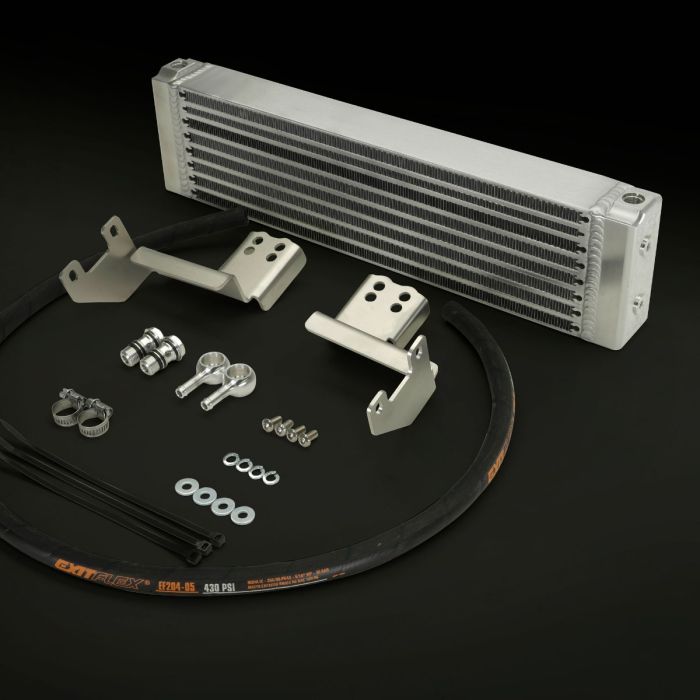
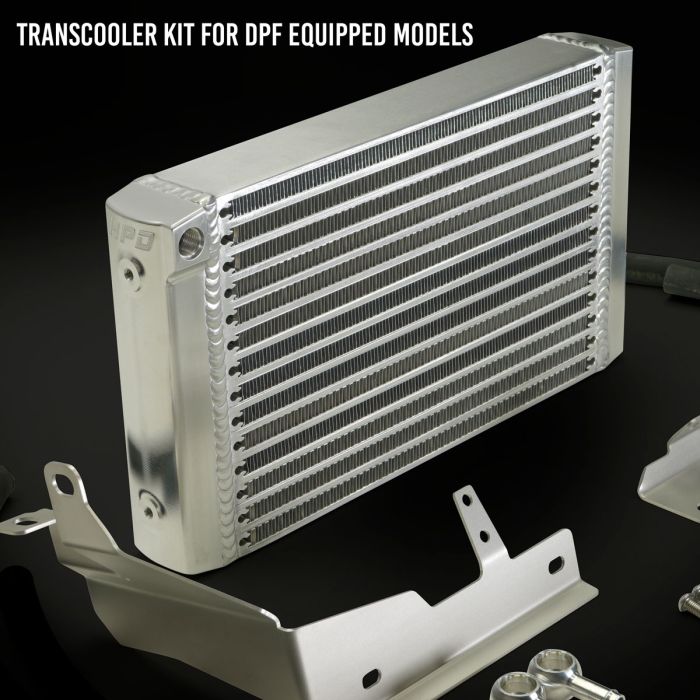
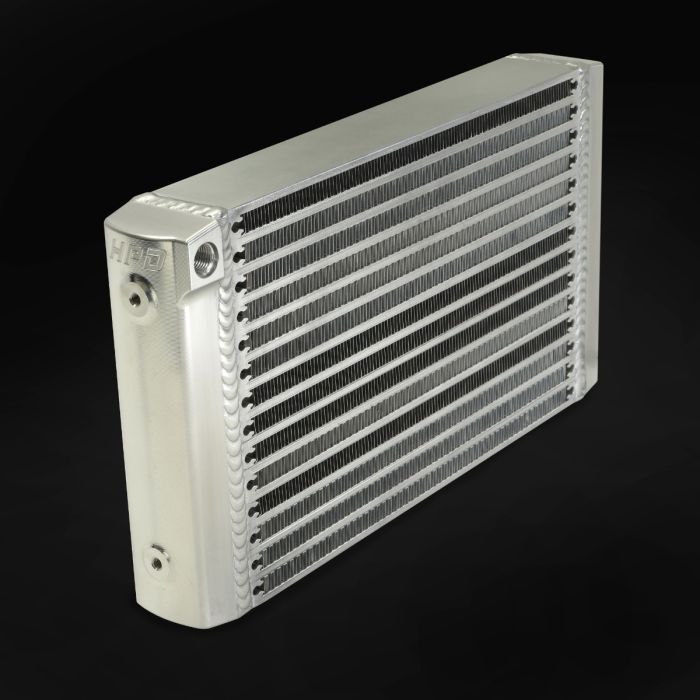
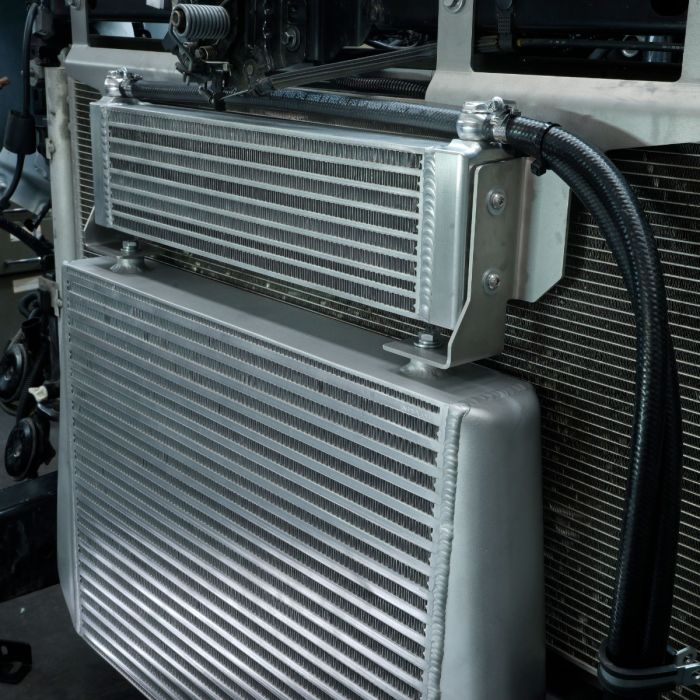
A transmission cooler kit adds an oil-to-air cooler in the airflow at the front of the vehicle, plumbed into the transmission's cooling circuit. More fluid passes through more cooling surface, so temperatures stay lower under load and recover faster once you back off.
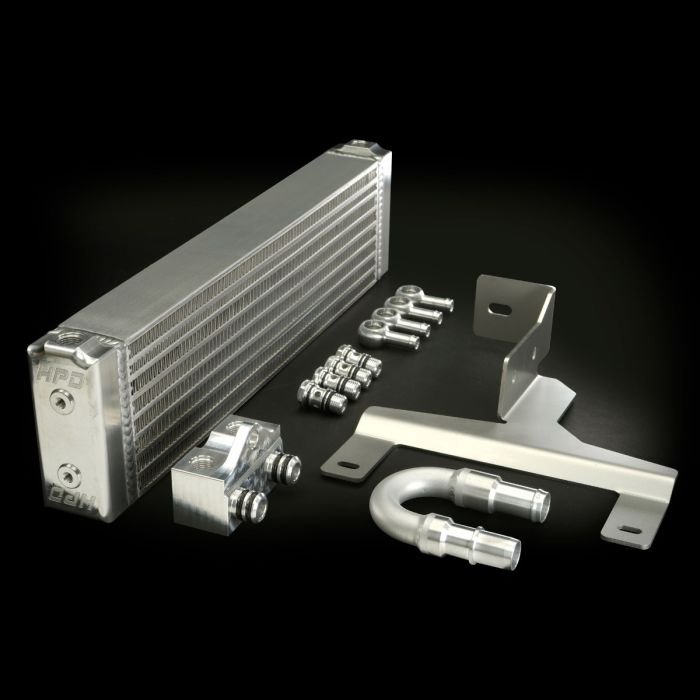
The kits we sell are made by High Performance Diesel (HPD) in Australia. Each one is built for a specific vehicle, with stainless steel brackets, hoses and fittings, and colour instructions written for DIY fitting. They're designed to sit clear of bullbars and other accessories without costing you ground clearance.
We list vehicle-specific kits for the Landcruiser 200 Series, the 300 Series, the Navara NP300, the Triton MV, the Amarok V6 and the BT-50, among others. If your vehicle isn't covered, the universal transcooler kit uses a 50mm thick bar and plate core and can be set up to suit most projects.
Things to know before you buy
Some modern automatics have a thermostat in the cooling circuit that holds the fluid at a set temperature. On those vehicles a cooler won't make the gauge read lower in normal driving. What it does is stop the temperature running away under load, which is the bit you care about.
Fitting is a bolt-on job with basic tools, though you will be opening transmission lines, so the fluid level has to be checked and topped up properly afterwards. If you're not comfortable with that, any workshop can fit a kit in a few hours.
A cooler also doesn't replace servicing. If you tow, change the transmission fluid more often than the logbook's normal-use interval.
Common questions
What temperature is too hot for an automatic transmission?
It varies by gearbox, so check what your manufacturer specifies. As a rough guide, most autos sit somewhere around 80 to 100 degrees in normal driving, and sustained running well above that is when fluid life starts to drop quickly.
Will a transmission cooler affect my warranty?
That depends on the manufacturer and the dealer, so ask before you fit one to a vehicle that is still covered.
Can a transmission run too cold?
In Australian conditions it's rarely a concern, and vehicles with a factory thermostat regulate it themselves.
Do manual gearboxes need a cooler?
No. A manual has no torque converter, so it doesn't generate heat in the same way.
See the full range of transmission cooler kits to find one for your vehicle.