 is here! Shop now, pay later in 4 easy instalments


Most lift kits come as springs and shocks in a box. The ute goes up 50mm, it looks right, and then the wheel aligner tells you he can't get the caster back into spec. Nobody mentioned that part at the counter.
A 2-inch lift is mild, and plenty of 4x4s run one with nothing else changed. Some don't get away with it. Below is what each supporting part does and how to tell whether your vehicle needs it, so you can skip the ones it doesn't.
What a lift changes underneath
On an independent front end (Hilux, Ranger, D-Max, Navara, Prado, 200 Series and most other modern 4x4s), longer struts push the lower arms down. That tilts the upper arms, steepens the CV shafts and pulls the brake hoses tighter when the wheel is hanging at full droop. At the back, a coil-sprung live axle held by a panhard rod gets dragged to one side as the body rises.
How much of this matters depends on the vehicle and on how much lift you really ended up with. A "2-inch" kit on a ute with no bar or winch can sit closer to 60mm or 70mm at the front.
Upper control arms
This is the one people get caught by most. After a lift, the factory arms often run out of adjustment, so the aligner can't dial enough caster back in. Low caster makes the steering feel light and vague on the highway, and the vehicle wanders in a way it didn't before.
Get the alignment done first and ask for the printout. If caster and camber are inside spec and it drives straight, keep your money. If the aligner has maxed out the factory adjusters and it's still short, adjustable upper control arms are the fix.
The ATI arms we stock give up to 4 degrees of caster adjustment across 7 positions, with greaseable ball joints and bushes you can service on the vehicle. There are kits for the Hilux, Fortuner, Prado and FJ Cruiser, the Ranger, Everest and BT-50, the Colorado, D-Max and MU-X, and the Navara and X-Class.
Diff drop kits
Lifting an IFS front end puts the CV joints on a steeper angle all the time. A steeper angle wears the joint faster and works the rubber boot harder, and a split boot that nobody notices is usually how a CV dies.
A diff drop kit lowers the front diff by 25mm to 45mm, depending on the vehicle, to bring that angle back toward where it started. At a true 2 inches opinions are split on whether you need one, and we think that's fair. Our rule of thumb is that if the vehicle sees a lot of low-range work with the front diff engaged, or the lift came out taller than planned, it is cheap insurance. A highway tourer that sits at an honest 50mm can go without and just keep an eye on the boots.
Extended brake lines
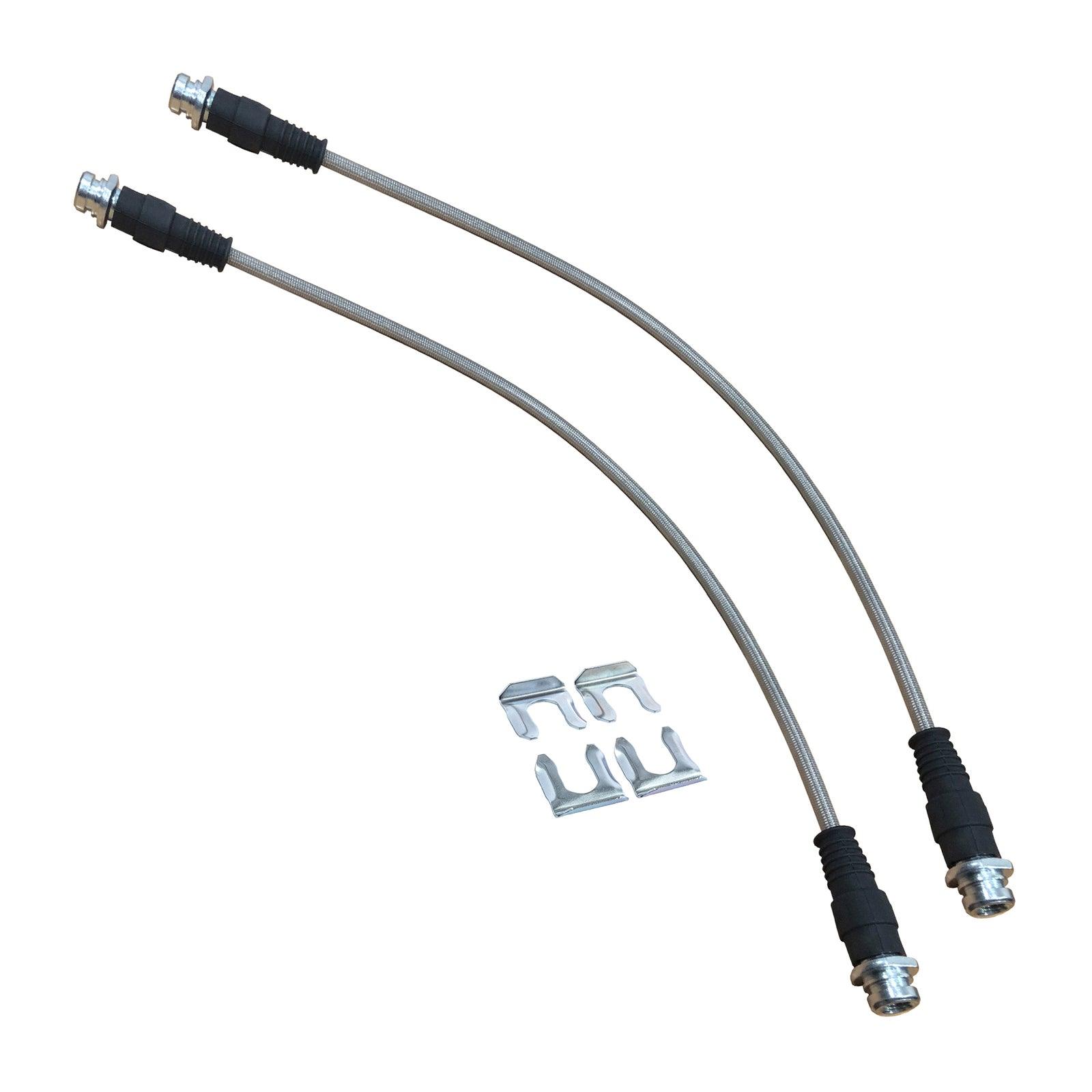
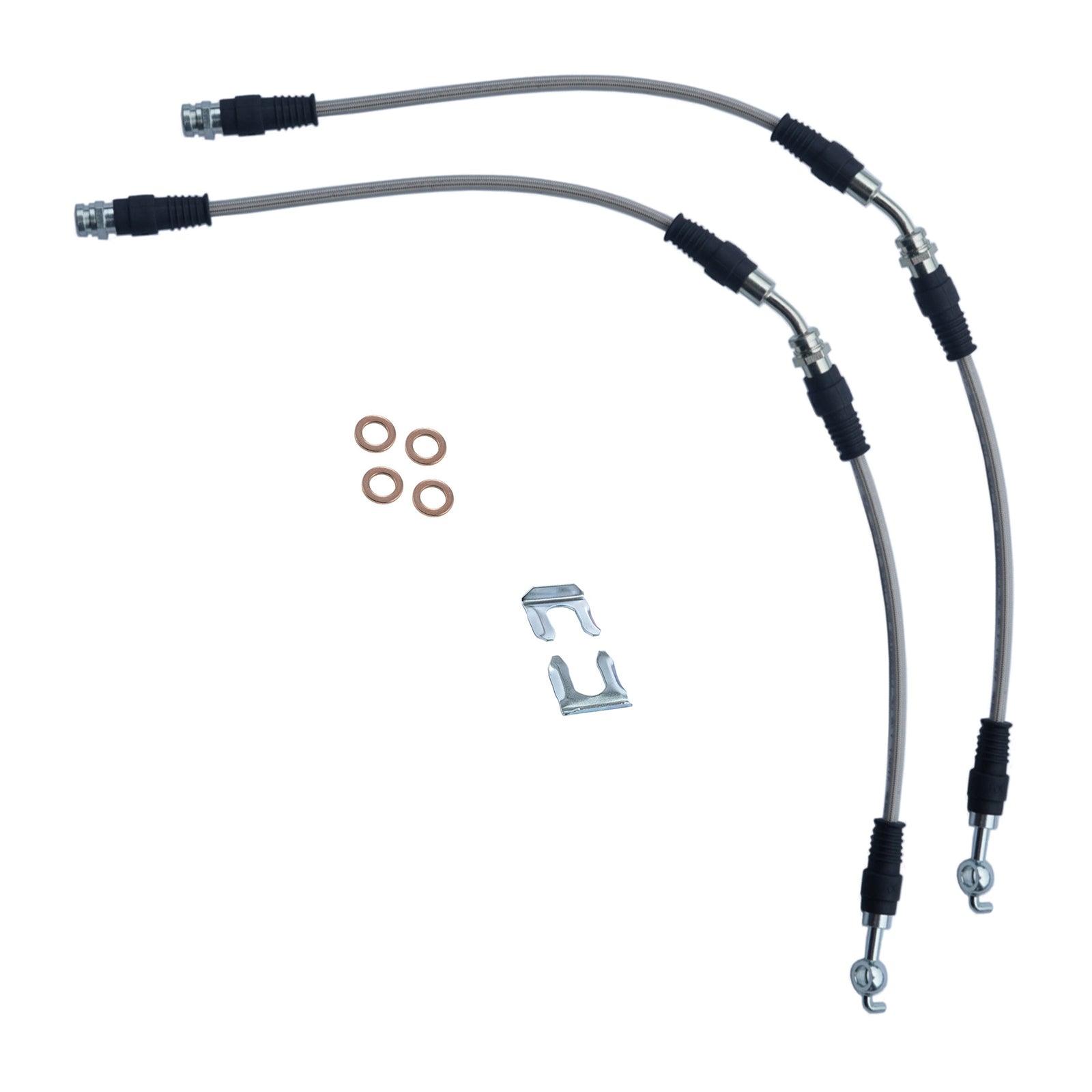
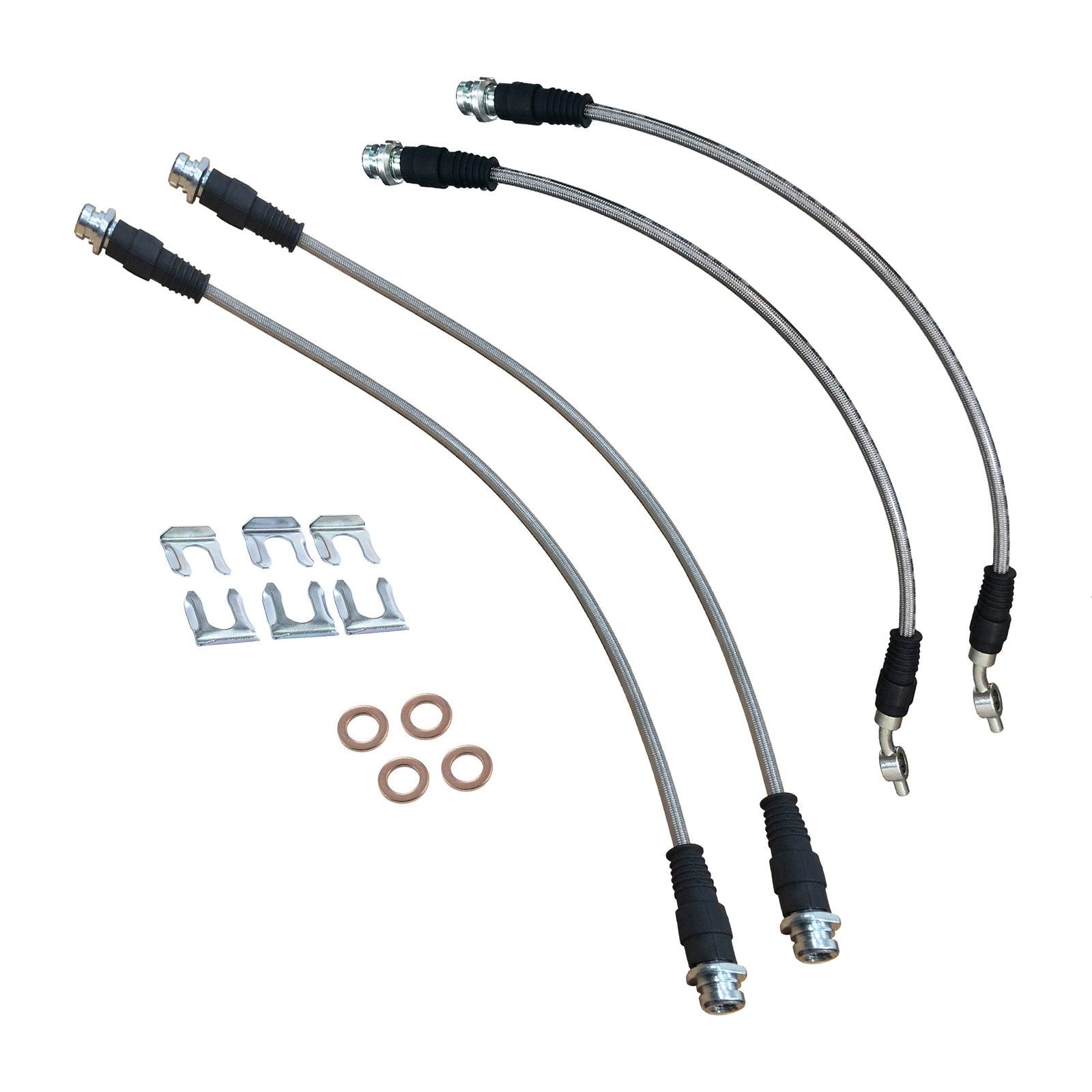
Brake hoses are cut to suit factory suspension travel. Go past about 2 inches and they can pull tight when the suspension drops away, which is the worst possible moment to be stretching a brake hose.
You can check this at home. Jack the vehicle by the chassis until a wheel hangs free, then look at the hose. If it still has a relaxed curve, you're fine. If it's straight and tight, fit extended braided brake lines. The ATI lines are ADR 42/04 compliant, and because braided line doesn't swell under pressure the pedal usually feels firmer as well. They're sold as fronts, rears or full kits by vehicle.
Adjustable panhard rods
This one only applies if your rear axle is located by a panhard rod, as it is on the Navara NP300, the 200 and 300 Series and the Prado 250. The rod is a fixed length, so when the body goes up the axle swings sideways. Stand behind the vehicle and compare how far each rear tyre sits from the guard. If one side pokes out more than the other, the axle is off centre.
An adjustable panhard rod lets you wind it back to the middle. Leaf-sprung utes like the Hilux and Ranger don't have a rear panhard rod, so you can cross this one off.
The order we'd do it in
- Fit the lift and let it settle for a week or two of normal driving.
- Check brake hose slack at full droop before you go off-road.
- Get a wheel alignment and keep the printout.
- Buy upper control arms only if the alignment can't be brought into spec.
- Check rear axle centring on coil-sprung vehicles.
- Decide on a diff drop based on your real lift height and how you use the vehicle.
One more thing before you spend anything. Lift rules differ between states, so check what your road authority allows before going past 50mm, particularly if you are adding bigger tyres on top.
Common questions
Do I need upper control arms for a 2-inch lift?
Only if the alignment can't be brought back into spec with the factory adjusters. Some vehicles align fine at 2 inches and some run out of caster. The alignment printout will tell you.
Is a diff drop worth it at 2 inches?
It is optional at a true 50mm. It makes more sense if your lift measured taller than that or you spend a lot of time in four-wheel drive on rough ground.
Will a lift affect my brakes?
The brakes work the same, but the hoses can end up too short at full droop. Check them with the wheels hanging and fit extended lines if they pull tight.
Can I fit these parts myself?
Control arms, diff drops and panhard rods are bolt-on jobs for someone comfortable on the tools, and you will need an alignment afterwards. Brake lines mean bleeding the system, so if you haven't done that before, pay a mechanic.
You can browse everything that goes around a lift in our suspension components range, or send us a message with your vehicle and lift height if you're not sure what fits.