 is here! Shop now, pay later in 4 easy instalments


You put your foot down to overtake and the ute goes flat. There's a whoosh from under the bonnet, a puff of black smoke in the mirror and maybe an engine light. On a turbo diesel ute, there's a good chance an intercooler hose has just let go.
It's a common failure on the Ranger and BT-50 3.2, the D-Max and MU-X, the Navara and the Colorado. It's also one of the cheaper problems to fix for good.
What the hoses do
Your turbo compresses air, which heats it. That air travels through the hot side hose to the intercooler, gets cooled, then goes through the cold side hose to the engine. Both hoses carry boost pressure every time you accelerate.
From the factory they're rubber. Rubber is cheap, quiet and easy to route around a crowded engine bay, which is why manufacturers use it.
Why they fail
Each time boost builds, a rubber hose balloons slightly and then relaxes. Over years of heat cycles and oil mist from the intake, the rubber softens. A soft hose swells more, and eventually it splits along a seam or blows off its clamp.
Towing speeds this up, because the engine spends longer at high boost. A tune speeds it up further, because boost pressure is higher than the hose was made for. If you've had your ute remapped and the hoses are still original, you're on borrowed time.
The swelling also costs you a little response before anything breaks. Some of the boost that should be going into the engine is being spent stretching the hose.
Symptoms of a split or leaking hose
- A sudden loss of power under load, often with limp mode.
- A hissing or whooshing sound when you accelerate.
- Black smoke, because the engine is fuelling for air that never arrives.
- An oily film on or around the hose.
- A hose that feels soft and spongy when you squeeze it with the engine off.
If you have a small leak, the ute may still drive well enough to get home. Don't keep driving on it for weeks, though. The turbo has to spin harder to make up the lost pressure.
Hard pipes or silicone hoses?
There are two ways to replace the factory rubber, and we stock both from All Terrain Industries.
Alloy hard pipes
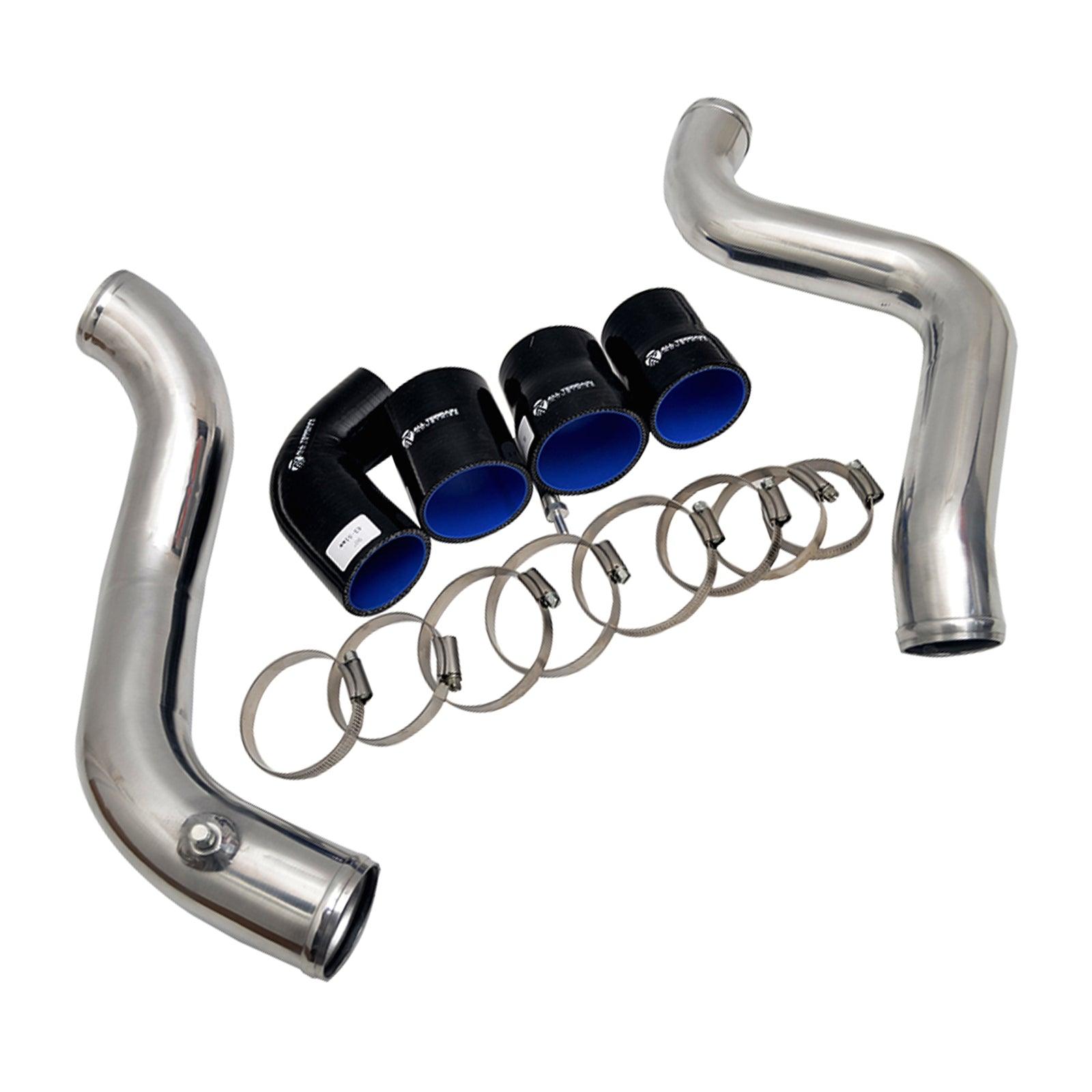
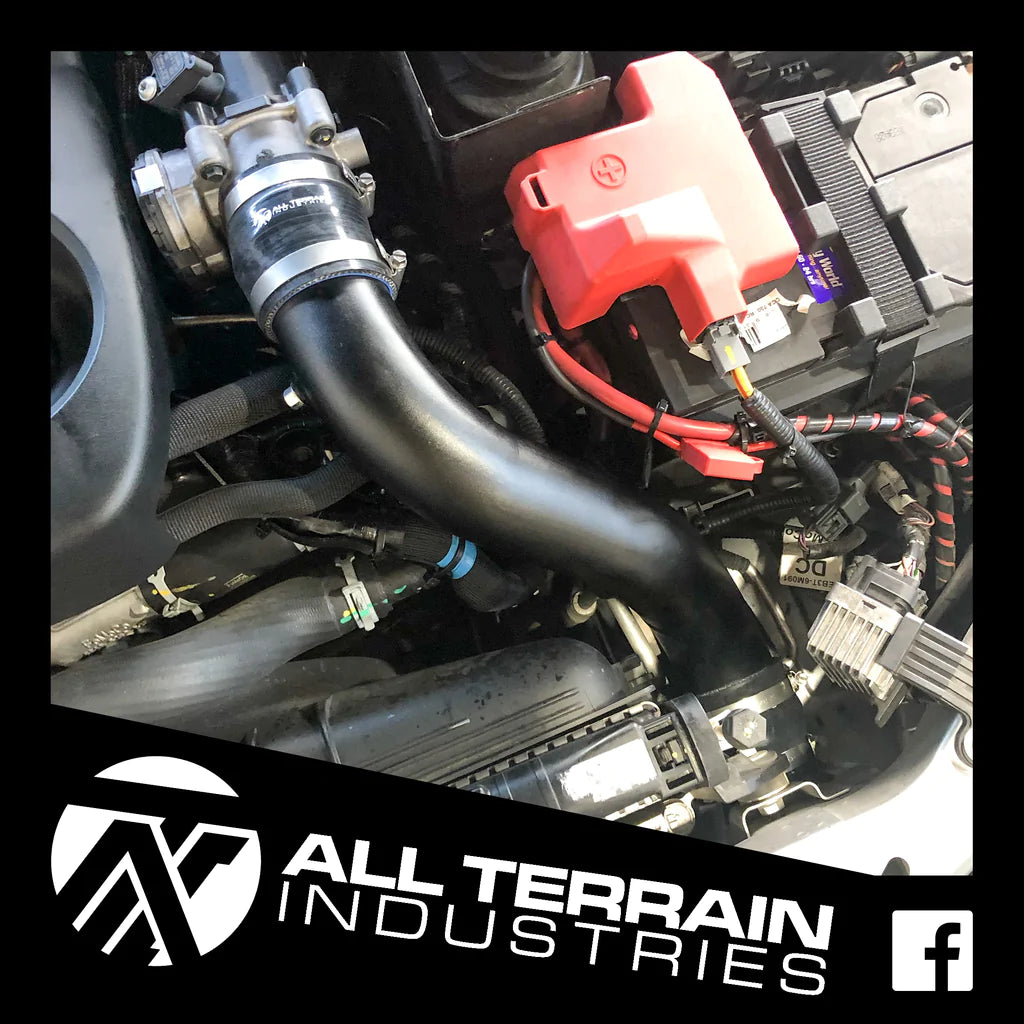
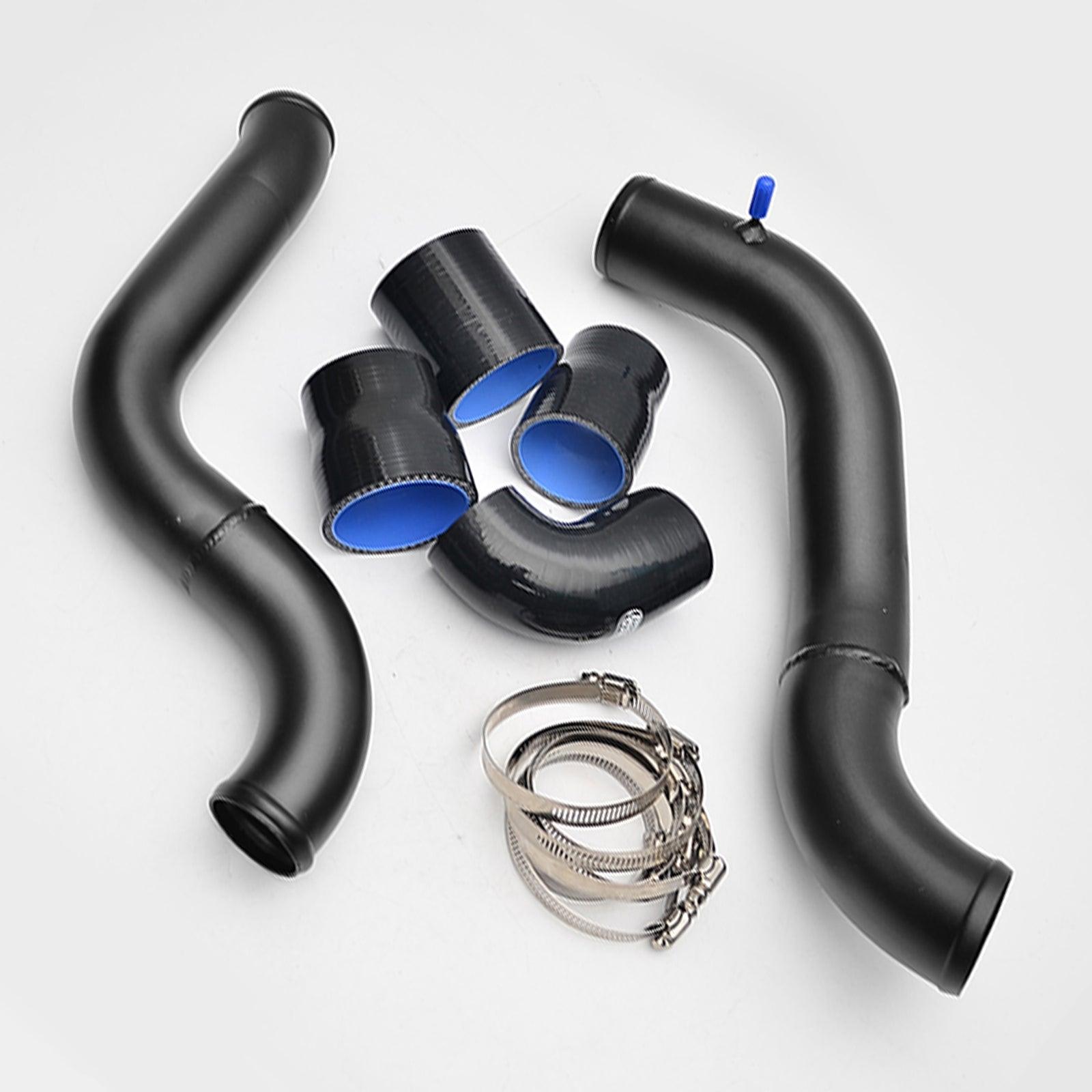
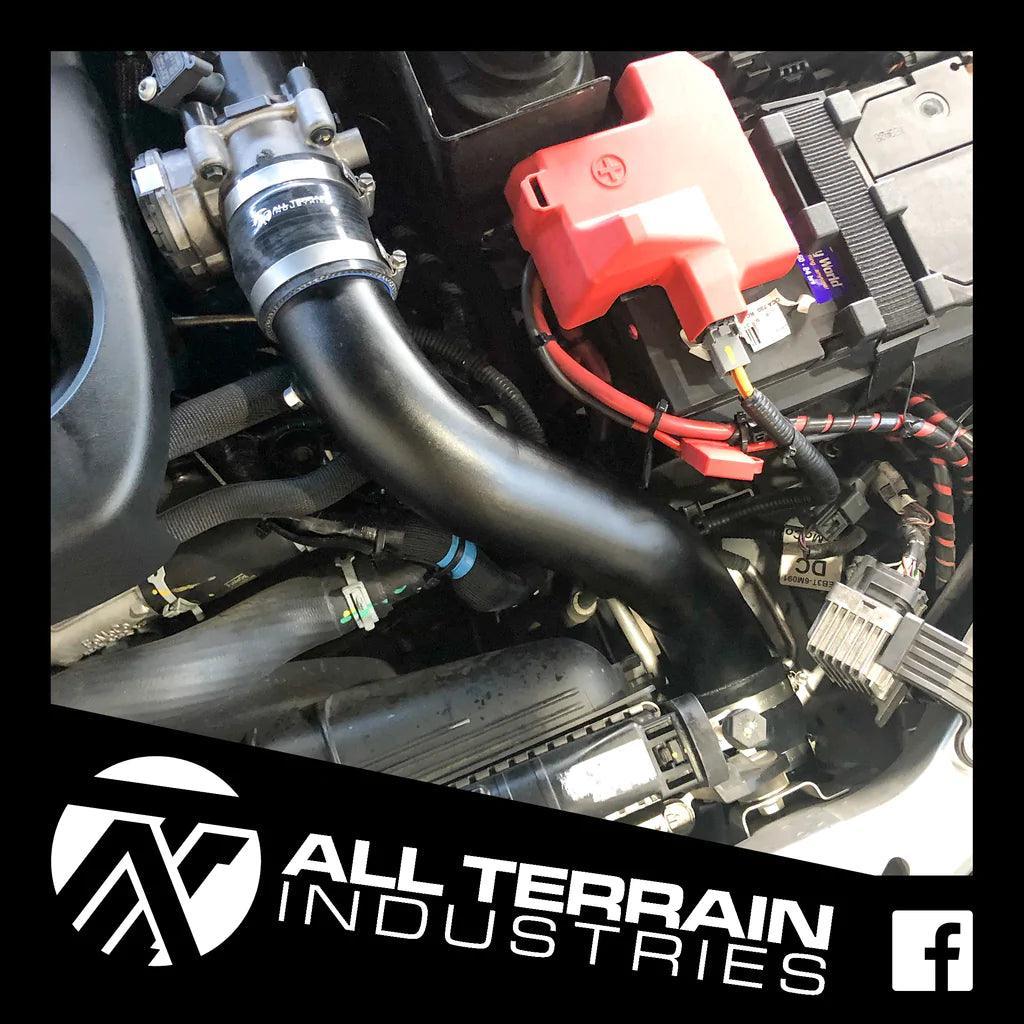
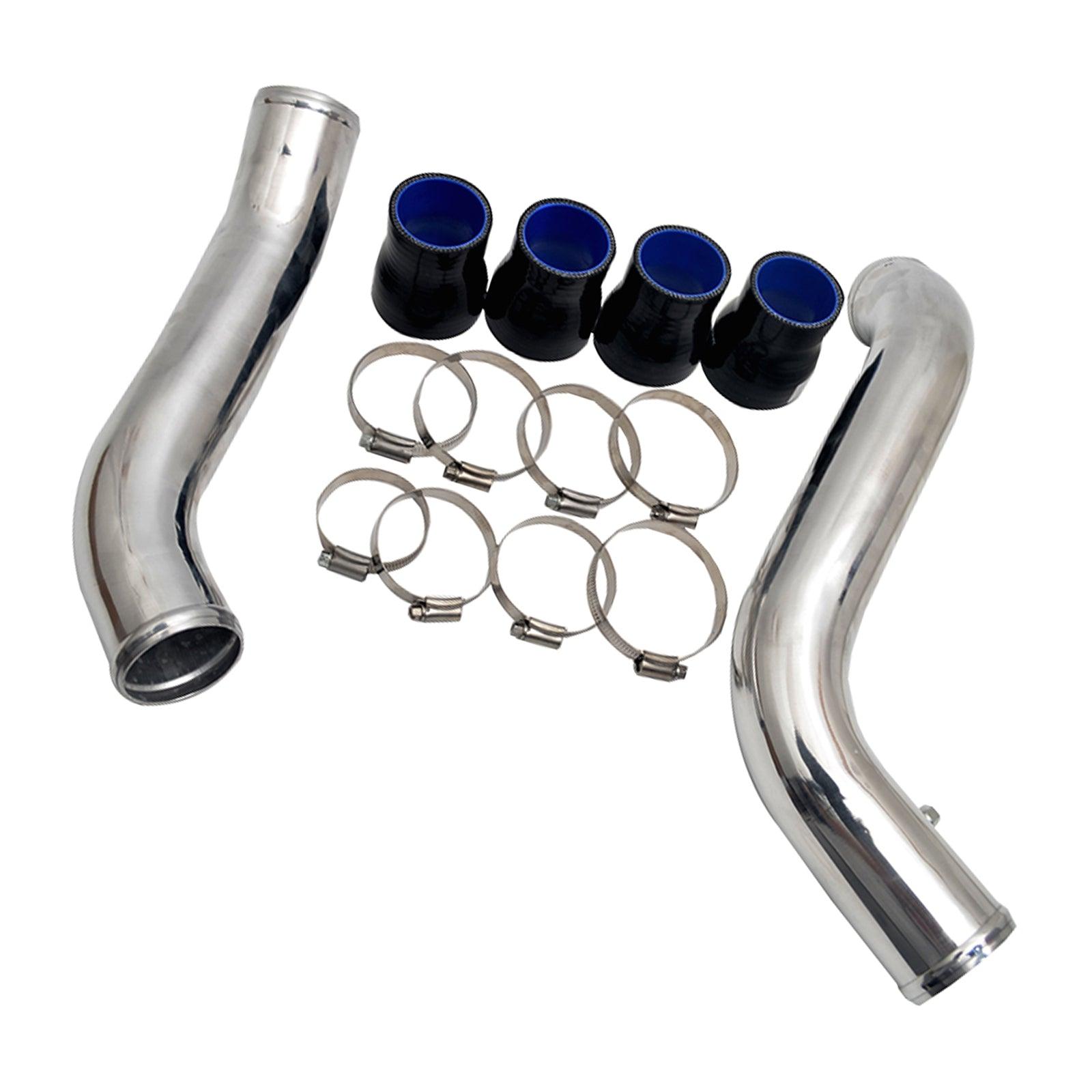
An intercooler hard pipe kit swaps the rubber hoses for alloy pipe, joined with short reinforced silicone couplers. Alloy can't expand under boost, so this is the option we'd pick for a tuned engine or a ute that tows. The ATI kits include both pipes, the joiners, all the clamps and a barb for a boost gauge, and they come in silver or black with a 2 year warranty.
Kits are available for the Ranger and BT-50 3.2, the D-Max and MU-X 3.0 from 2012 to 2020, the 2020-on D-Max and BT-50, and the Navara D40 2.5.
Silicone hoses
Silicone intercooler hoses follow the factory shape, so they go in exactly where the old ones came out. The ATI hoses are wire reinforced, which limits how much they can swell, and silicone copes with heat and oil far better than rubber. They carry a 5 year warranty.
You can buy the hot side and cold side separately or as a pair. They cover the Ranger and BT-50 3.2, the Everest 3.2, the Navara NP300 2.3, the D-Max and MU-X 3.0 and the Colorado 2.8. For a stock ute that just needs a tired hose replaced with something that will last, silicone is the simpler choice.
Fitting them
Both are a driveway job. You'll need basic hand tools and an hour or two. A few things make it go better:
- Do it with the engine cold. The hot side lives up to its name.
- Wipe the oil off the intercooler and turbo outlets before fitting the new parts, or the joiners can slide off under boost.
- Seat each clamp behind the bead on the pipe, then tighten it firmly without crushing the hose.
- Recheck the clamps after a week of driving.
Common questions
Can I drive with a split intercooler hose?
You can limp it somewhere safe, but the engine will be down on power and smoky. Get it fixed before you tow or do any distance.
Will hard pipes add power?
Not on their own. What they can do is give you back the response the swelling hoses were soaking up, and they stop the failure from happening again.
Should I replace the hoses before they fail?
If the ute is tuned, tows, or is past 100,000km on the original hoses, we would. It costs far less than a tow home from the middle of a trip.
Is there oil in my intercooler hose because something is wrong?
A light oily film inside the intake hoses is normal on a turbo diesel. Oil pooling in the hose is worth having a mechanic look at.